
Automated Distribution Center Design: Reducing Footprint with Compact Parcel Singulation
Operations leaders driving distribution center automation are no strangers to navigating space and productivity constraints. If you walk through a busy parcel hub with one, it won’t take long to uncover inefficiencies in system design or facility layout that create operational headaches.
Often, the biggest issue isn’t outdated technology or shifting operational demands. It’s that the system simply takes up significantly more space than necessary. And when you’re designing around system size and building constraints, the issue compounds, creating bottlenecks and processes that struggle to flex with demand.
In many parcel operations, the parcel singulator quietly becomes the driving force behind footprint, layout decisions, and downstream performance.
In brownfield environments, that reality is even more pronounced. You have pillars in the wrong places. Floors that may need leveling. Docks built for a different era. This is the nature of brownfield warehouse automation, where physical limitations turn system design into a constraint-driven exercise.
Simple conveyor systems move product from point A to point B in whatever space is available. But systems such as automated parcel singulators often require 30 feet or more to perform their function.
While many operations accept that as the standard, the industry is shifting toward more compact approaches to parcel singulation that challenge that assumption.
Parcel singulation: the constraint no one designs around
Parcel singulation is the transition point between bulk flow and control. It sits between accumulation and feed on one side, and sortation on the other.
Engineers understand what that means. Everything downstream depends on consistency. Spacing. Predictable presentation.
What is less often considered is how many interfaces converge in this single zone.
Automated parcel singulators sit between upstream flow control and downstream spacing requirements, while also requiring maintenance access, reroute capability, and recovery space.
These are not small adjustments. Each requirement adds physical space that influences the footprint of the entire system.
In distribution center automation, this is where layout decisions begin to shape everything that follows.
When “tight” becomes “sprawling”
Some parcel singulation approaches aim to compress the function. Others distribute it across long conveyor runs with added buffering.
Most systems don’t become oversized because of one major design mistake. They grow through a series of practical decisions:
Adding buffer to manage inconsistent bulk flow
Extending length to allow more time for orientation correction
Creating recovery lanes for doubles or irregulars
Increasing spacing for maintenance access
Adding reroute paths to maintain uptime
Each decision makes sense in isolation. But together, they expand the parcel singulator footprint and push the system outward.
Longer singulation zones shift induction points, extend conveyor networks, and increase integration complexity. Over time, the front end of the system becomes the reason the entire operation must expand.
In space-constrained environments, that expansion competes directly with staging, routing, and safe operator movement.
The hidden cost of footprint in distribution center automation
Space is not just a design variable. It directly impacts operational outcomes.
In distribution center automation projects, footprint determines how effectively the facility can grow, operate, and adapt.
When footprint increases:
Available staging space shrinks
Sort destinations may be limited
Maintenance access becomes constrained
Downtime becomes more difficult to avoid
Automation design in this context becomes a layout optimization exercise, often using simulation to model equipment footprint against throughput requirements.
This is especially true in brownfield warehouse automation, where systems must fit within fixed infrastructure rather than ideal layouts.
Footprint decisions are not about saving space alone. They are about preserving operational flexibility.
Brownfield warehouse automation: the building you have
Brownfield facilities introduce constraints that cannot be ignored:
Structural columns
Uneven floors
Outdated dock configurations
Ongoing operations that cannot stop
This is the reality of brownfield warehouse automation. You are engineering performance inside fixed geometry.
In this environment, compact systems are not optional. They are what make automation feasible.
Greenfield design: the building you commit to
Greenfield environments provide flexibility, but footprint still carries risk.
Overbuilding fixed infrastructure can lock operations into rigid layouts that are difficult to adapt.
Modern distribution center automation strategies prioritize flexibility, modularity, and scalability.
Compact upstream design, including parcel singulation, creates room for expansion, additional processes, and evolving flow paths without requiring a full redesign.
A better way to evaluate parcel singulation
If you lead operations or engineering, evaluating a parcel singulator should come down to a few practical questions:
What is the plan for peak variability at the front end?
How does the system handle service access and reroutes in a live operation?
How does it fit within the specific constraints of a brownfield facility?
These questions help shift the conversation from product claims to operational reality.
What compact parcel singulation changes
When parcel singulation footprint is reduced, the impact extends across the entire system.
Instead of consuming space, the system creates it.
That space can be used for:
Additional sort destinations
Improved staging capacity
Better maintenance access
Future expansion
In distribution center automation, this is where footprint becomes a lever for performance, not a limitation.
The solution for scalable, modular parcel singulation
The industry is shifting upstream. The front end is getting more attention because it determines how everything else performs.
Aegis’ TetraSort Singulator was built to address this exact challenge.
With industry-leading throughput per linear foot, it enables parcel singulation in significantly less space than traditional systems.
Its compact design reduces overall system footprint while supporting high throughput, flexibility, and simplified maintenance access.
When combined with broader system capabilities, it allows operations to unify singulation, sortation, and control within a simplified architecture.
What role does parcel singulation play in long-term system design?
Parcel singulation sets the foundation for system performance.
Facilities rarely outgrow sortation first. They outgrow space. And that often starts with how the parcel singulator was designed.
Aegis’ experts work with operations and engineering teams every day to navigate these exact challenges, balancing throughput, flexibility, and footprint in real-world environments.
If you are evaluating a new system or rethinking the layout of your current facility, start with a conversation. We offer free consultations to help you assess your operation, identify opportunities to reduce footprint, and design a system that fits your building and your growth plan.
Connect with the Aegis team to explore how the right singulation approach can unlock more from the space you already have.
Frequently Asked Questions
What is parcel singulation and why does it matter in distribution center automation?
Parcel singulation is the process of converting bulk parcel flow into a single-file, spaced, and consistently oriented stream that downstream systems can process efficiently. In distribution center automation, it plays a critical role because it sits at the transition point between accumulation and sortation.
If the parcel singulator cannot deliver consistent spacing and alignment, downstream equipment will struggle to maintain throughput. This makes parcel singulation a key driver of system performance, not just a supporting function.
How does a parcel singulator impact footprint in an automated distribution center?
A parcel singulator directly influences the footprint of an automated distribution center because it defines how much space is required upstream of sortation.
Long or inefficient parcel singulation systems require additional conveyor length, buffer zones, access areas, and recovery lanes. These decisions compound downstream, expanding the overall system footprint.
Compact parcel singulation, on the other hand, pulls the system inward. It frees up space for staging, additional sort destinations, maintenance access, and future expansion without sacrificing throughput.
What should you look for when evaluating a parcel singulator for a brownfield facility?
When evaluating a parcel singulator for a brownfield warehouse automation project, focus on how well it fits within existing constraints.
Key questions include:
How much linear footprint does the parcel singulator require?
How does it handle peak variability and bulk flow inconsistency?
What space is needed for maintenance access and reroute points?
Can it be installed without major structural changes?
In brownfield environments, the ability to deploy a compact parcel singulator without extensive building modifications often determines whether the automation project is viable.
Why is brownfield warehouse automation more sensitive to footprint than greenfield design?
Brownfield warehouse automation projects operate within fixed constraints like columns, uneven floors, dock limitations, and active operations.
Because of this, every square foot of space matters. Expanding the footprint of one system, such as parcel singulation, directly reduces space available for staging, routing, safety aisles, or additional processes.
In contrast, greenfield facilities offer more design flexibility, but footprint decisions still impact long-term scalability. Overbuilding early can lock operations into rigid layouts that are difficult to adapt.
How does compact parcel singulation improve distribution center automation performance?
Compact parcel singulation improves distribution center automation by aligning three critical outcomes: throughput, flexibility, and serviceability.
Throughput: Maintains consistent flow to downstream sortation without requiring excessive buffering
Flexibility: Creates room for expansion, additional processes, or layout adjustments
Serviceability: Reduces congestion and improves access for maintenance and operation
Instead of treating footprint as a constraint, compact parcel singulation turns it into a lever for improving overall system performance.
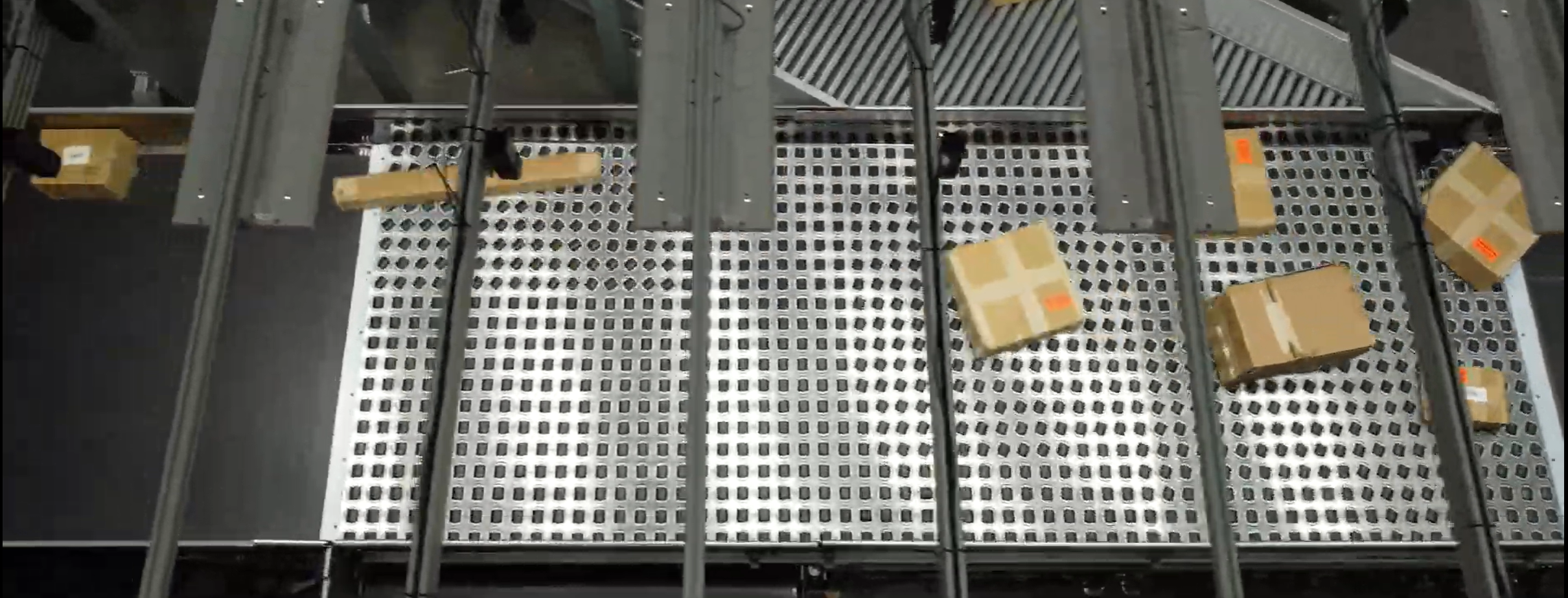
TetraSort Singulator