
How to Handle Today’s Diverse Package Mix Using Automated Sortation
Distribution centers, fulfillment operations, and manufacturers are handling a wider range of products through increasingly automated processes. Cartons and totes now commonly share equipment with polybags, padded mailers, small items, and irregular products, each with different handling characteristics.
That variety matters when designing conveyor and sortation systems. Size, weight, shape, packaging material, and orientation can all affect how consistently a product moves, tracks, and diverts. An automated sortation system needs to perform across the products an operation actually handles, including the difficult items that tend to create exceptions.
Understanding those differences is an important first step toward selecting the right equipment.
Why Product Variety Creates New Sortation Challenges
Product variety has become a growing consideration across distribution and fulfillment. DC Velocity reported in April 2026 that warehouses are dealing with an increasing range of items that need to be conveyed and sorted, specifically citing polybags, padded envelopes, and boxes of varying dimensions moving through facilities at the same time. The publication identified item diversity as a key driver of changes in automated sortation systems.
Manufacturing presents its own version of the challenge. SKU proliferation is among the factors influencing equipment decisions identified in PMMI's 2026 State of the Industry Report, according to Modern Materials Handling.
These changes put more emphasis on understanding the products a system will encounter.
A rigid, consistently sized carton creates a different handling condition than a lightweight polybag. An item with an uneven center of gravity will behave differently than a uniform tote. Small products introduce different considerations than large or irregular ones.
These differences matter more when several product types must move through the same equipment.
Five Product Characteristics That Affect Sortation Performance
1. Size and Dimensions
Length, width, and height are basic inputs when designing an automated sortation system, but the extremes of the product range deserve just as much attention as the average.
Small products need adequate support as they move across conveyor surfaces and equipment transitions. Long or oversized products need enough usable surface area to stay under control. Width can affect the available space and timing for a successful divert.
Reviewing actual product data helps identify these conditions before selecting equipment.
2. Shape and Rigidity
Cartons and totes typically retain their shape in transit. Flexible packaging behaves differently.
Polybags and soft packages can flex or shift as they move. Irregular products may have limited or inconsistent contact with the conveying surface. These differences can affect transitions between equipment and the way a product responds during a divert.
The equipment must consistently accommodate those physical characteristics at the speeds required by the operation.
3. Weight and Weight Distribution
Two products with the same dimensions can behave differently when one is significantly heavier or its weight is concentrated on one side.
Weight affects acceleration and product movement. Weight distribution can affect stability during direction changes. Both factors deserve attention when an application includes a broad SKU range.
Looking only at minimum and maximum weight specifications can leave important information out of the evaluation. Representative products provide a much clearer picture of what the equipment will experience each day.
4. Packaging and Surface Characteristics
The surface touching the conveyor also matters.
Corrugated cartons provide different contact characteristics than plastic totes or flexible mailers. Packaging can also change based on supplier, season, promotion or shipping method.
Operators do not necessarily control every piece of packaging entering their facility. That makes testing the difficult and less predictable products particularly valuable when evaluating automated conveyor and sortation equipment.
5. Orientation and Stability
Products do not always arrive at a sorter in their ideal orientation.
An item can shift as it transfers between conveyors, enters a merge, or moves through upstream processes. That positioning can influence scanning, tracking, and diverting later in the system.
Product control therefore begins before the actual sort. Conveyors, merges, accumulation, spacing and induction all influence the condition in which a product arrives at the sorter.
How Product Variability Affects Conveyor and Sortation Systems
Sortation performance depends on several processes working together.
Consider the path an item might follow:
Induction → Conveyance → Spacing → Identification → Tracking → Divert → Destination
The product's physical characteristics can influence its movement through that sequence.
For example, inconsistent spacing upstream can make identification and tracking more difficult. A package that shifts orientation at a transition may enter the sorter differently than intended. If a divert or destination cannot reliably accept certain products, those items may require recirculation or manual handling.
Small issues can also compound at higher volumes. An occasional handling exception may be manageable at low rates. Repeated across thousands of products, it can consume labor and valuable system capacity.
This is why maximum sorter speed tells only part of the story. Sustainable throughput depends on how consistently products make it through the complete process.
What to Look for in an Automated Sortation System
Start with the products that will actually run through the equipment.
A representative product profile should include both common items and the cases that cause the most difficulty today. Understand sizes, weights, packaging types and other physical characteristics before evaluating how closely a technology fits the application.
From there, consider several areas.
Product Compatibility
Determine which products the equipment is designed to handle and where limitations exist. Pay particular attention to the edges of your product profile rather than designing around the average SKU.
Product Control
Consider what happens to an item as it enters, travels across, and exits the sorter. Reliable tracking, spacing, speed, and directional control contribute to consistent performance.
System-Level Performance
Look upstream and downstream. Induction, conveyor, merges, scanning, accumulation, and destinations all influence the rate the overall system can sustain.
Reliability and Serviceability
Understand how routine maintenance is performed and what happens when a component needs attention. Ease of access, component replacement, and equipment design all affect the amount of time maintenance requires.
Flexibility
Product profiles rarely remain identical for the life of an automation system. New SKUs, packaging changes, shifts in order profiles, and business growth can change what equipment needs to handle.
A system that can accommodate a broad product range and adapt to changing requirements gives the operation more room to grow.
Design Around Your Real Product Mix
The best automation decisions begin with good operational data.
Understand what your facility handles today, where exceptions occur and which products create the most manual intervention. Include those difficult products when you evaluate and test equipment.
Averages have value for system design, but they can hide the conditions that create problems. A product representing a small percentage of total volume can still have an outsized operational impact if it repeatedly requires rehandling or manual intervention.
The goal is repeatable performance across the product mix your operation actually encounters.
Frequently Asked Questions About Automated Sortation Systems
What types of products can automated sortation systems handle?
The answer depends on the sorter technology and application. Automated sortation systems can be designed around cartons, totes, polybags, mailers, small products, and other items. Evaluate product dimensions, weight, shape, rigidity, and surface characteristics against the capabilities of the specific equipment under consideration.
How do polybags affect conveyor and sorter performance?
Polybags are flexible and can behave differently from rigid cartons as they move through conveyor transitions and sortation equipment. Their dimensions, weight, contents, and orientation can also vary. DC Velocity specifically identifies the growing mix of polybags, padded envelopes, and boxes of different dimensions as part of the increased complexity facing today's warehouses.
What should I consider when selecting an automated sortation system?
Start with your actual product profile and required throughput. Then consider product compatibility, divert performance, tracking and control, upstream and downstream equipment, available space, reliability, maintenance requirements, and future operational changes. Testing representative products can provide valuable information before you make a final equipment decision.
Conveyor and Sortation Solutions Built Around Your Operation
Every operation has a different product mix, layout, and set of performance requirements. Aegis Sortation provides conveyor and automated sortation solutions for distribution, fulfillment, warehousing, manufacturing, e-commerce, retail, and parcel applications.
Our conveyor portfolio includes belt, roller, MDR, and other configurations designed around different product and application requirements. For applications that require advanced sortation and product control, the TetraSort Platform uses individually controlled, steerable rollers and a modular design to support diverting, merging, singulation and other material handling applications.
Aegis also integrates conveyor, sortation, controls, robotics, and software to address the complete application.
Explore our conveyor and sortation solutions or talk with our team about the products your operation needs to handle.
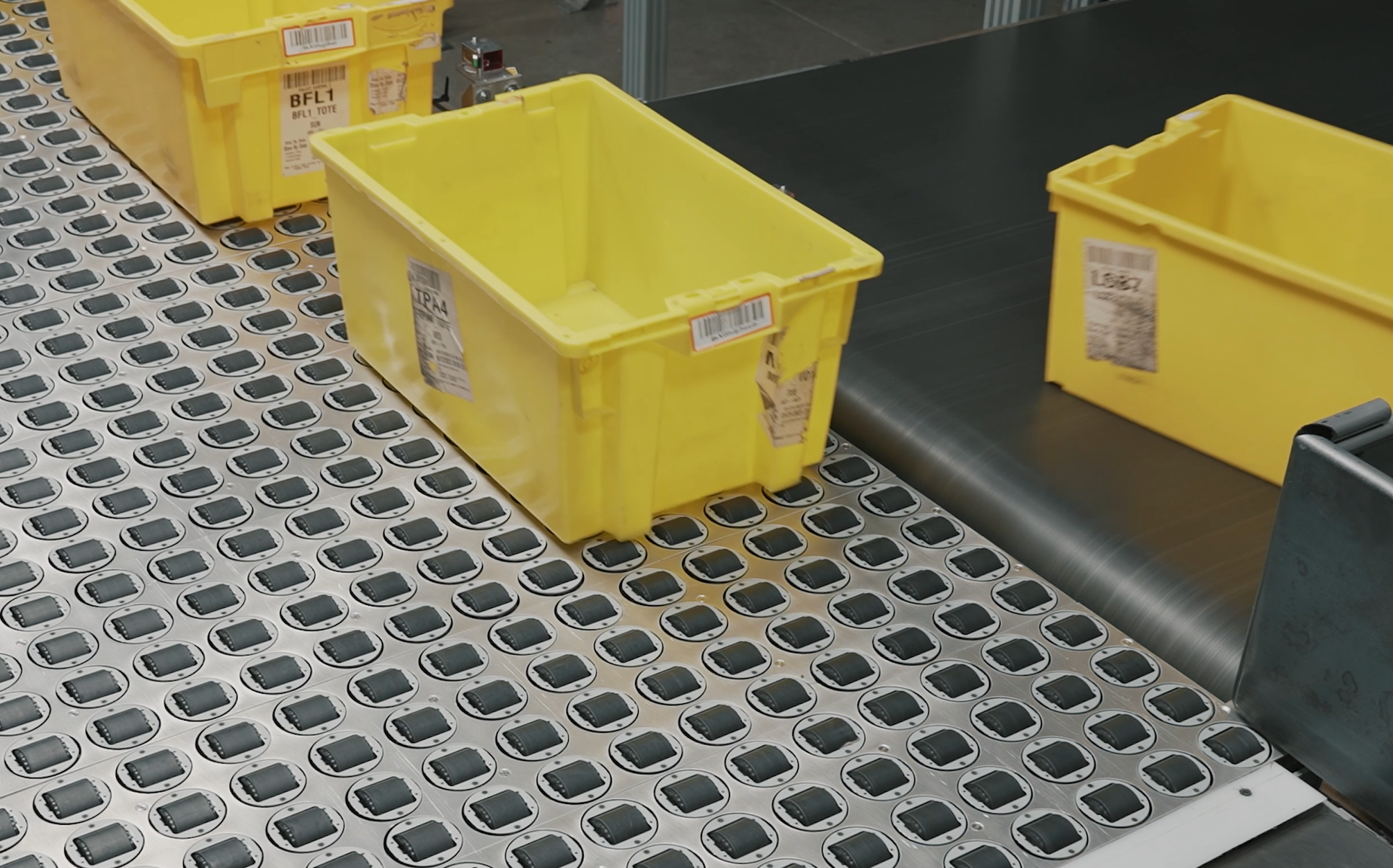
TetraSort Divert handling empty totes on an automated conveyor line.